
Redeveloped Caberg neighbourhood in city of Maastricht more resilient against waterlogging and heat
Between 2021 and 2025, the southeastern part of the Caberg neighbourhood in the Dutch city of Maastricht was redeveloped. From the get-go, climate adaptation occupied centre stage in the plans. The result: a future-proof environment that shows how smart water solutions and greening together create a pleasant living climate.
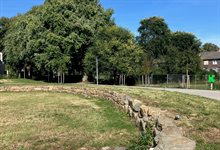
Photo: Municipality of Maastricht
What prompted this project?
A few years ago, Servatius Wonen & Vastgoed housing corporation initiated the redevelopment plan for the southeastern part of the Caberg neighbourhood: the area between Henri Jonaslaan, Peter Huyssenslaan, Theo van der Schuerlaan and Gilles Doyenstraat streets. Here, more than 100 old houses made way for 85 new ones: 35 ground-floor apartments and 50 apartments on higher floors. Furthermore, the area was redeveloped. An important point of departure: in addition to becoming more attractive and healthier, the neighbourhood also needed to become more resilient to heat and severe downpours.
Green park as the heart of the environment
At a central location in the neighbourhood, a new green park was created. In addition to serving as a play area and meeting location, this park also helps to climate-proof the environment. On hot days, the many new trees provide shade and cooling. The park also collects rainwater. Part of the park has been recessed with a view to water storage, whereas other parts have been raised to create a playful landscape. The newly planted greenery is a mix of indigenous trees, flowers and plants to improve local biodiversity.
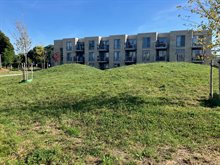
Photo: Municipality of Maastricht
Smart use of rainwater
An important feature of the project was to disconnect rainwater from the sewer system, using a system of underground infiltration facilities, green pavements and a bioswale in the centre of the green park. Wherever possible, rainwater infiltrates the soil on which it falls. During severe downpours, rainwater will temporarily collect in the bioswale, whereupon it will infiltrate the subsoil via the walls and gravel columns. The rainwater system was designed and built in accordance with the new standards, meaning it is capable of collecting 80 millimetres of rainwater in two hours. In practice, the overall system has turned out to be quite efficient in processing rainwater. The project costs amounted to some 1.7 million euros.
Contact
Chantal Kurvers
Municipality of Maastricht
Chantal.kurvers@maastricht.nl