
Ga naar de inhoud
Climate Adaptation Platform Netherlands (naar homepage)
Direct naar
  • About us
  • Sitemap
  • Nederlands
  • Caribbean
  • Helpdesk
  • Home
  • Get started
  • Knowledge dossiers
  • Tools
  • Examples
  • Library
  • Policy and programmes
  • About us
  • Sitemap
  • Nederlands
  • Caribbean
  • Helpdesk
  1. Home ›
  2. Knowledge dossiers ›
  3. Urban water quality ›
  4. How is climate change affecting water quality and aquatic life? ›
  5. Abiotic factors ›
  6. Uitklappen toxins

Uitklappen toxins

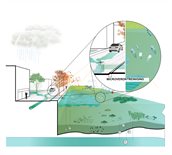
How does severe precipitation relate to micropollutants?

Particularly after a prolonged period of drought, intense downpours may cause micropollutants to end up in surface water. Such micropollutants could be tyre dust, copper from car brakes, microplastics, pesticides, veterinary pharmaceuticals or oil residue. Micropollutants are harmful to life in and around surface water. For many locations, hardly any data is available on the concentration of micropollutants in surface water. In most cases, the tests conducted by water management bodies only cover a few micropollutants, as such tests are quite costly.
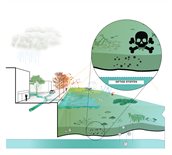
How does the waterbed release toxins?

Under certain conditions, the soil underneath bodies of water in former industrial locations can release toxins. The same goes for bodies of water in farmland. This risk is highest in hot weather and in water that has been stagnant for a prolonged period of time due to persistent drought. In warm temperatures, toxins or toxic residues (aka degradation products) are released more quickly. If they end up in the water, such substances will seriously harm life in and around the surface water. This risk is going to increase in the future, as we will see increasingly frequent warm and dry periods, alternating with torrential rain.

Sources

Sun N, Yearsley J, Baptiste M, Cao Q, Lettenmaier DP, Nijssen B. A spatially distributed model for assessment of the effects of changing land use and climate on urban stream quality. Hydrological Processes. 2016; 30(25): 4779-98.

Mahbub P, Goonetilleke A, Ayoko GA, Egodawatta P. Effects of climate change on the wash-off of volatile organic compounds from urban roads. Science of the Total Environment. 2011; 409(19): 3934-42.

De Nijs ACM, Driesprong A, den Hollander HA, de Poorter LRM, Verweij WHJ, Vonk JA, et al. Risico’s van toxische stoffen in de Nederlandse oppervlaktewateren Bilthoven: RIVM; 2008.


Share this
  • Delen op Facebook
  • Delen op LinkedIn

Helpdesk

mail-ballon-transparant

Please use the contact form to contact the editors if you have any questions or comments regarding climate adaptation or this website.

Joining forces to accelerate climate proofing!

The Climate Adaptation Knowledge Portal is the pre-eminent source of information for everyone engaged in climate adaptation. It provides practical information, useful tools, inspiring examples and the latest news.

About this website

  • About us
  • Disclaimer
  • Privacy statement
  • Contact
  • Accessibility
  • Archive

Follow us

LinkedIn