
Biological effects: How is climate change affecting aquatic life?
The changing climate and its physio-chemical effects on surface water together affect life in and around water. This is referred to as the biological effects on water quality. Which effect will occur highly depends on the location and the water system. This page delves into the effects of climate change on common flora and fauna in surface water: (blue-green) algae, aquatic plants, fish, exotic species and mosquitoes.
Tool helps to improve water quality
The different characteristics of a water system together determine its water quality. Altering the value of such characteristics enables you to influence or “control” the water quality. Are you interested in improving the water quality of a water system? The Water Quality Roadmap and the Urban Water Quality, Climate and Adaptation Tool will be helpful in this respect. The Roadmap is mainly focused on identifying potential measures to influence the characteristics; the Tool is focused on indicating the limiting values of characteristics relating to functional uses. For example, it shows the maximum blue-green algae (cyanobacteria) content for the quality of swimming water to qualify as reasonable, good or excellent.
Changes in balance: more blue-green algae and duckweed, fewer submerged aquatic plants
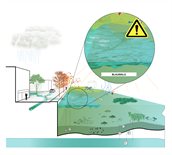 Climate change is leading to an increase in runoff and leaching from the land, as a result of which more nutrients are tending to end up in the water. Thus, phosphorus and nitrogen concentrations in the water will increase. This can result in over-enrichment of the water, which is referred to as eutrophication. Stagnant water adds to this effect. Eutrophication fosters the growth of algae and blue-green algae. A comparatively high proportion of algae and blue-green algae in the water will have a negative impact on water quality. Blue-green algae tend to grow easier, in part because they can form thick floating layers on the water surface. Together with other algae, they thus shade out other species, such as aquatic plants underneath, which hampers their growth. This may turn a water system from a clear body featuring many aquatic plants into a turbid affair with many (blue-green) algae. Climate change is adding to this trend, not only because of the increased volumes of nutrients ending up in the water, but also because the growing season is extended. As a result, spring and autumn will see more algae and blue-green developing. Milder winters also affect the quality of surface water: rampant species hibernating in or on the water profit most from mild winters. For example, duckweed is increasingly prevalent in minor, sheltered bodies of water, as the plant no longer dies off in winter.
More rampant or floating plants
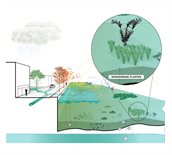
The growing nitrogen and phosphorus concentrations in water resulting from climate change have a negative impact on the diversity of aquatic plants. As explained above, they can turn water quite turbid, with large volumes of algae and without submerged aquatic plants. If aquatic plants just manage to beat algae in the nutrient competition, a single dominant aquatic vegetation may form. Often, the water system has already grown more turbid, and the waterbed will receive little light. Rampant species such as Elodea, Potamogeton perfoliatus and Ceratophyllum demersum have little or no need to root in the soil and require little light to grow. Thus, they will gradually out-compete benthic and slow-growing species. This effect is enhanced as such rampant species no longer die off in winter. Depending on the level of eutrophication, a state can develop featuring fewer submerged aquatic plants and more floating leaf plants.
Fish mortality and changes in fish species
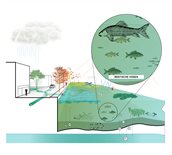
Both in summer and in winter, fish mortality occurs primarily in shallow waters. In summer, fish mortality will increase, whereas winters will see a decrease. In winter, fish may die when bodies of water are covered with ice and snow for a prolonged period of time, which prevents oxygen from mixing with the water underneath the ice. However, as prolonged icy periods will occur less and less frequently due to climate change, overall winter fish mortality will decrease. As our summers are becoming warmer, summer fish mortality will increase, as high temperatures in stagnant water can cause hypoxia. Climate change not only affects fish mortality but also the composition of fish species. Cold fish species will disappear. Benthic fish such as carp and bream, which live at or near the bottom of water, will become more prevalent. In addition, higher temperatures will result in changes in reproductive behaviour, such as sex changes or failed reproduction. Furthermore, spawning seasons may become longer, so surface water will be inhabited by small fish for a prolonged period of time. This will affect water quality: the water will contain more algae and fewer aquatic plants, because small fish eat zooplankton, thus leaving less zooplankton to eat the algae.
More exotic species and mosquitoes

Climate change can lead to an increase in exotic flora and fauna in the Netherlands. For example, in milder winters, certain exotic plant and wildlife species will survive in surface water. Furthermore, species originating from warmer habitats may settle in our country. In the absence of natural enemies, exotic species can start to dominate other species. Such exotic species include the American crayfish, water lettuce, floating pennywort and common water hyacinth.
Mosquito nuisance can occur at locations where drained rainwater remains stagnant for too long. This mainly occurs when small-scale, above-ground drainage systems become clogged, e.g. with large quantities of sediment running off during torrential rain. Furthermore, climate change is adding to the probability of tiger mosquitoes and common house mosquitoes transmitting diseases.