Functional water quality
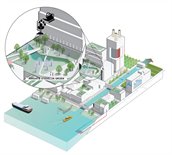
In agriculture, horticulture, picking gardens and vegetable gardens, water is used to water food crops. This is referred to as irrigation. Although market gardeners collect their own rainwater, this will not suffice in periods of drought; they will then also use surface water and groundwater for irrigation purposes. Surface water is probably also used in vegetable gardens. Climate change is likely to increase the need for irrigation water. At the same time, climate change is adding to the probability of water quality issues, which may lead to shortages of suitable irrigation water. Such shortages can be attributed to two causes:
- During warm and dry periods, some locations may see more algae and blue-green algae developing in the water. In addition, concentrations of toxins such as pesticides and chemicals will be higher, due to their lesser dilution during dry periods.
- During torrential rain, larger volumes of pathogens will end up in the water through street runoff and sewer overflows. In addition, micropollutants will increase, as the rainwater will carry pollutants such as tyre dust, copper and oil residue. Using such water for the irrigation of food crops will pose health risks.
In the lower-lying parts of the Netherlands, the supply of suitable irrigation water is decreasing as a result of salinisation.
Sources
- Rolsma RJ, Buma J, van Meerten H, Dionisio M, Elbers JA. Effect van droogte op stedelijk gebied, Kennisinventarisatie. Delft: Deltares; 2012.
- Malakar K, Mishra T, Patwardhan A. A framework to investigate drivers of adaptation decisions in marine fishing: Evidence from urban, semi-urban and rural communities. Science of the Total Environment. 2018; 637-638: 758-70.
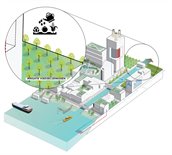
Water is also used for greenery other than food crops, such as ornamental gardens and public greenery. Climate change may add to water demand for such purposes, primarily because of the increasingly frequent warm and dry periods. In addition, municipalities intend to expand their greening efforts, for the purpose of climate adaptation, CO2 reduction and boosting biodiversity. Furthermore, the probability of less water of sufficient quality being available in the future is increasing, due to the increasing probability of drought and inferior water quality. See also the explanation under Irrigation of food crops.
Source
Interview with Hoekse Waard case study partners, Amsterdam and Groningen (June-July 2020)
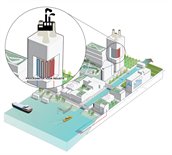
The industrial sector uses surface water as, e.g., flushing water and process water. Climate change may result in salinisation of surface water, for example through saltwater seepage or the inlet of brackish water. Salinisation can have a negative impact on the suitability of surface water for industrial purposes. This poses risks for industrial plants that cannot cope with high salt concentrations (ions and cations) in the water. If salt concentrations become too high, the plants processing such water need to use other materials that are less prone to corrosion. In addition, different preprocessing methods may be required. Literature shows that such interventions may lead to higher production costs. No data is available on the actual critical salt content for industry.
Sources
- Van der Zeijden PTH, Muizer AP, Braaksma RM, Pasaribu MN. Industriewater in Nederland. Zoetermeer: EIM; 2009
- Van Cleef R, Laro J. Het zoete and bittere van verzilting. H2O. 2008.
- Willet J, King J, Wetser K, Dykstra JE, Oude Essink GHP, Rijnaarts HHM. Water supply network model for sustainable industrial resource use a case study of Zeeuws-Vlaanderen in the Netherlands. Water Resources and Industry. 2020; 24: 100-131.
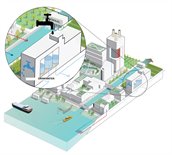
Groundwater provides 60 per cent of drinking water; the other 40 per cent comes from surface water. Climate change can lead to a decrease in suitable sources of drinking water and thus to higher production costs for drinking water. The main causes are the increasing drought, salinisation and the deterioration of water quality:
- Drought reduces the dilution of pollutants in the water, as a result of which the concentration of, e.g., toxins in the water can become too high. This, in combination with a deterioration in groundwater quality, will reduce the number of suitable sources of drinking water, leading to drinking water shortages and/or higher production costs.
- If salt concentrations go up as a result of salinisation, drinking water purification facilities will need to be adapted. This is very costly. Currently, chloride concentrations are being used as the basis for calculating whether water qualifies for purification into drinking water. In the current purification process, water with a chloride concentration in excess of 150 milligrams per litre is no longer suitable for use as drinking water.
Sources
- Wessels M, Weideman P, Hoijtink R, Vreman BJ, Schreuders R. Rivierdossier Waterwinningen Rijndelta: Feitendossier. ‘s-Hertogenbosch: Arcadis; 2019.
- van der Meulen ES, Sutton NB, van de Ven FHM, van Oel PR, Rijnaarts HHM. Trends in Demand of Urban Surface Water Extractions and in Situ Use Functions. Water Resources Management. 2020; 34 (15): 4943-
- BKMW, 2009: https://wetten.overheid.nl/BWBR0027061/2017-01-01
- Interview with Hoekse Waard case study partners, Amsterdam and Groningen (June-July 2020)
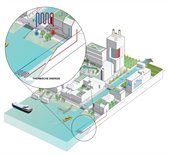
Surface water can also be used for heating or cooling purposes. This is referred to as extracting thermal energy from surface water. For example, surface water is used as industrial cooling water and for heating and cooling buildings.
Cooling water for industry
The bulk of industrial water consumption involves cooling water. This water heats up during use and is subsequently discharged onto surface water. Climate change is expected to result in more discharge restrictions. Furthermore, salinisation resulting from climate change can reduce the use of surface water as cooling water.
Why is climate change resulting in more discharge restrictions?
In order to protect fish and macrofauna (small aquatic creatures) in the water, surface water must not become too warm. For that reason, additional restrictions apply to the discharge of warm water in warm periods, during which surface water will heat up of its own accord. Such restrictions are expected to increase due to the increasing heat and drought: as a result of heat, water warms up faster, and periods of drought disrupt the circulation of surface water.
How will discharge restrictions affect the production of electricity?
According to a model study by Van Vliet et al. (2012), over the period 2031–2060, the capacity of nuclear and fossil power plants in Europe is expected to decrease by an average of 6.3 to 19 per cent. This means that the probability of production decreasing by 90 per cent or more will be three times as high. According to the Dutch National Adaptation Strategy (NAS), scarcity of cooling water (and/or lack of wind) will lead to rising electricity prices on a European scale.
What is the impact of salinisation?
Salinisation of surface water can reduce its use as cooling water. In the southwestern part of the Netherlands, salinisation may lead to restrictions for 6 to 14 per cent of the total energy production. This will involve one to three power plants. Some plants are not affected by salinisation or have already been adapted to the use of (more) saline surface water.
Sources
- Van der Zeijden PTH, Muizer AP, Braaksma RM, Pasaribu MN. Industriewater in Nederland. Zoetermeer: EIM; 2009.
- Van Cleef R, Laro J. Het zoete en bittere van verzilting. H2O. 2008.
- Potentiële Koelcapaciteit Rijkswateren 2005-2050. The Hague: Ministry of Transport and Water Management/RIZA; 2005.
- Van Vliet MTH, Yearsley JR, Ludwig F, Vögele S, Lettenmaier DP, Kabat P. Vulnerability of US and European electricity supply to climate change. Nature Climate Change. 2012; 2 (9): 676-81.
- Waterstaat MvIe. Nationale Adaptatie Strategie 2016 (NAS). Den Haag: Ministry of Infrastructure and Water Management 2016.
- Interview with Hoekse Waard case study partners, Amsterdam and Groningen (June-July 2020)
Heating and cooling of buildings
Surface water can be used to heat and cool houses and other buildings. Via a heat exchanger, heat or cold is released into the building’s climate control system. For example, to heat buildings in winter and provide warm tap water, heat is extracted from surface water in summer and stored in the subsoil: heat/cold storage. To cool buildings, cold water can be extracted from deep waters throughout the year.
How is climate change affecting options for thermal energy?
As a result of the increasingly frequent and warmer periods of heat, water temperatures are rising, whilst in times of drought, circulation of (warm) water is disrupted. As yet, few studies have been conducted into these effects. It is clear, however, that the potential volume of heat or cold to be extracted depends on three factors: the total water surface, the water temperature and the flow rate (volume of water passing per second). Climate change affects the latter two factors. Therefore, the expectation is that climate change will have a slight impact on this functional use. The local-level impact can be explored through a model study.
Source
- Kruit K, Schepers B, Roosjen R, Boderie P. Nationaal potentieel van aquathermie: Analyse en review van de mogelijkheden. Delft: CE Delft; 2018. Report No.: 18.5S74.116.
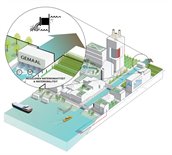
Climate change can affect the suitability of surface water for use in the improvement of the quality and volume in other bodies of water.
Regulating water quality
Surface water can be used to improve the quality of other bodies of water. For example, in some cases, additional water is let in to combat anoxia. In some areas of the lower-lying parts of the Netherlands, additional water is sometimes let in to combat salinisation. This requires inlet water of good quality. Climate change may deteriorate the quality of surface water, rendering it unsuitable or less suitable for use as inlet water to improve the quality of other bodies of water.
Regulating water quantity: water inlet
For various functional uses, such as living and inland shipping, being able to keep surface water levels up to par is important. Excessively low water levels can, for example, cause damage to building foundations, bridges, tunnels and roads. Water levels can be regulated via pumping stations, by supplying water from or discharging water to other bodies. Climate change means we are facing increasing periods of drought, which requires us to let in more water in order to maintain the desired water levels. However, climate change may also cause more frequent deterioration of inlet water quality. Inlet water of a quality inferior to the receiving water can compromise the latter’s ecology or its suitability for other uses. In addition, sufficient water may not always be available, requiring choices to be made. In such cases, the prioritisation scheme will come into effect.
Sources
- Smith P, Ashmore MR, Black HIJ, Burgess PJ, Evans CD, Quine TA, et al. REVIEW: The role of ecosystems and their management in regulating climate, and soil, water and air quality. Journal of Applied Ecology. 2013; 50 (4): 812-29.
- Interview with Hoekse Waard case study partners, Amsterdam and Groningen (June-July 2020)
- Kosten S, Schep S, van Weeren BJ. Een frisse blik op warmer water: Over de invloed van klimaatverandering op de aquatische ecologie en hoe je de negatieve effecten kunt tegengaan. Amersfoort: STOWA; 2011.
- Wessels M, Weideman P, Hoijtink R, Vreman BJ, Schreuders R. Rivierdossier Waterwinningen Rijndelta: Feitendossier. ‘s-Hertogenbosch: Arcadis; 2019.
- Wang M, Zhang DQ, Su J, Dong JW, Tan SK. Assessing hydrological effects and performance of low impact development practices based on future scenarios modeling. Journal of Cleaner Production. 2018; 179: 12-23.
- Sohn W, Kim JH, Li MH, Brown R. The influence of climate on the effectiveness of low impact development: A systematic review. Journal of Environmental Management. 2019; 236: 365-79.
- https://www.uvw.nl/extra-aanvoer-zoet-water-om-verzilting-in-westen-tegen-te-gaan/
- Interview with Hoekse Waard case study partners, Amsterdam and Groningen (June-July 2020)
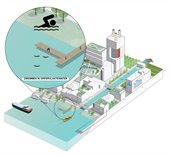
Climate change may compromise the quality of surface water to be used for swimming, thus posing more health risks. At the same time, such use is increasing. As temperatures are rising, people tend to go swimming outside more often. Not only at designated swimming locations but also in, for example, canals, many of which’s water quality is not monitored. The quality of swimming water can deteriorate as a result of various climate effects:
- Runoff and sewer overflows following severe downpours result in higher concentrations of pathogens in surface water. This adds to the risk of infectious diseases, mainly gastro-intestinal disorders and skin disorders. Higher water temperatures are also known to increase the risk of swimmer’s itch. This disease is caused by the larvae of the Trichobilharzia parasite, which are more prevalent in higher water temperatures.
- In summer, high water temperatures are conducive to the occurrence of algae and blue-green algae. This can result in a swimming ban.
- The ecological state of surface water can change from clear water featuring many aquatic plants to turbid water containing a great deal of algae, as aquatic plants are outcompeted by the algae.
Sources
- Sterk A, de Man H, Schijven JF, de Nijs T, de Roda Husman AM. Climate change impact on infection risks during bathing downstream of sewage emissions from CSOs or WWTPs. Water Research. 2016; 105: 11-21.
- Waterstaat MvIe. Nationale Adaptatie Strategie 2016 (NAS). The Hague: Ministry of Infrastructure and Water Management 2016.
- Verweij WHJ, van der Wielen J, van Moorselaar I, van der Grinten E. Impact of climate change on water quality in the Netherlands Bilthoven: National Institute for Public Health and the Environment RIVM; 2010. Report No.: National Institute for Public Health and the Environment RIVM Report 607800007/2010
- Sterk A, Schijven J, De Nijs T, De Roda Husman AM. Direct and indirect effects of climate change on the risk of infection by water-transmitted pathogens. Environmental Science and Technology. 2013; 47 (22): 12648-60.
- Poulin R. Global warming and temperature-mediated increases in cercarial emergence in trematode parasites. Parasitology. 2006; 132 (Pt 1): 143-51.
- Sterk A, Schijven J, de Roda Husman AM, de Nijs T. Effect of climate change on runoff of Campylobacter and Cryptosporidium from land to surface water. Water research. 2016; 95: 90-102.
- Interview with Hoekse Waard case study partners, Amsterdam and Groningen (June-July 2020)
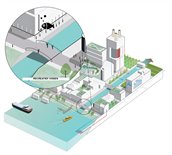
In the Netherlands, recreational fishing is accommodated in a wide range of waters. Many anglers focus on specific species, which can differ widely. Climate change may alter the composition of fish species. The decline in water quality has a negative impact on the amount of diverse fish communities, as such fish need clear water. Consequently, the fish water types featuring carp and bream are increasingly prevalent. Carp and bream are bottom-dwelling species, prevalent in nutrient-rich, turbid conditions. Another consequence of climate change is that certain fish species grow more rapidly and that the spawning season is changing. This may affect the open angling season for certain species. Furthermore, anoxia caused by high water temperatures can lead to fish mortality.
Sources
- Teurlincx S, Kuiper JJ, Hoevenaar ECM, Lurling M, Brederveld RJ, Veraart AJ, et al. Towards restoring urban waters: understanding the main pressures. Current Opinion in Environmental Sustainability. 2019; 36:49-58.
- Interview with Hoekse Waard case study partners, Amsterdam and Groningen (June-July 2020)
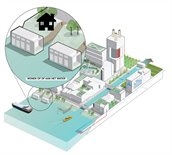
For people living on or by water, for example, in a houseboat, climate change may affect the enjoyment of their residence and their perception value of the environment. For example, lower water levels may cause damage to foundations and sewer pipes. In addition, poor water quality can cause stench, blue-green algae and mosquito nuisance.
Source
Interview with Hoekse Waard case study partners, Amsterdam and Groningen (June-July 2020)
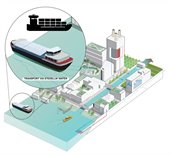
Water is used as a route network for local, national and international transport of goods and people. In urban areas, goods transport by water is expected to increase, as municipalities harbour increasing ambitions relating to sustainability, and room on the roads will decline. The Dutch National Adaptation Strategy states that climate change may lead to restrictions on inland shipping, “likely in this century”. This is the result of excessively low water levels during drought, excessively high levels during peak discharges and limited discharge due to high sea water levels. Studies into the effects of climate change on shipping focus on the major inland shipping waterways in Europe, the River Rhine in particular. No data is available on the impact on options for transport by water in urban areas.
Sources
- Waterstaat MvIe. Nationale Adaptatie Strategie 2016 (NAS). The Hague: Ministry of Infrastructure and Water Management 2016.
- 5Janjevic M, Ndiaye AB. Inland Waterways Transport for City Logistics: A Review of Experiences and the Role of Local Public Authorities. WIT Transactions on the Built Environment. 2014; 138: 12.
- Maes J, Sys C, Vanelslander T. Vervoer Te Water: Linken Met Urban Distributie. Antwerp: Steunpunt Goederen- en personenvervoer; 2012.
- Berents R, Straver H. Watervisie Amsterdam 2040: een ruimtelijk-economisch perspectief op het gebruik van het water met een uitvoeringsagenda tot 2018. Amsterdam: Municipality of Amsterdam; 2016.
- Jonkeren OE. Adaptation to Climate Change in Inland Waterway Transport Amsterdam: Vrije Universiteit Amsterdam; 2009.
- Scholten A, Rothstein B, Baumhauer R. Mass-cargo-affine industries and climate change. Climatic Change. 2014; 122 (1): 111-25.
- Christodoulou A, Christidis P, Bisselink B. Forecasting the impacts of climate change on inland waterways. Transportation Research Part D: Transport and Environment. 2020; 82: 102159.
- Interview with Hoekse Waard case study partners, Amsterdam and Groningen (June-July 2020)