How is climate change affecting water quality and aquatic life?
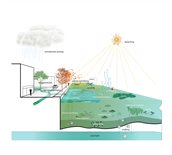
Climate change has various consequences for the quality of surface water and for aquatic life. These consequences can be divided into two types: physio-chemical and biological effects. Both types are explained in the paragraphs below. Furthermore, you will see two visualisations at the bottom of this page: the first shows how the effects of climate change affect the physio-chemical and the biological water quality. The second is a more concrete visualisation of the urban area. Click on the image to go to the enlarged version with an explanation of the various consequences.
Physio-chemical effects
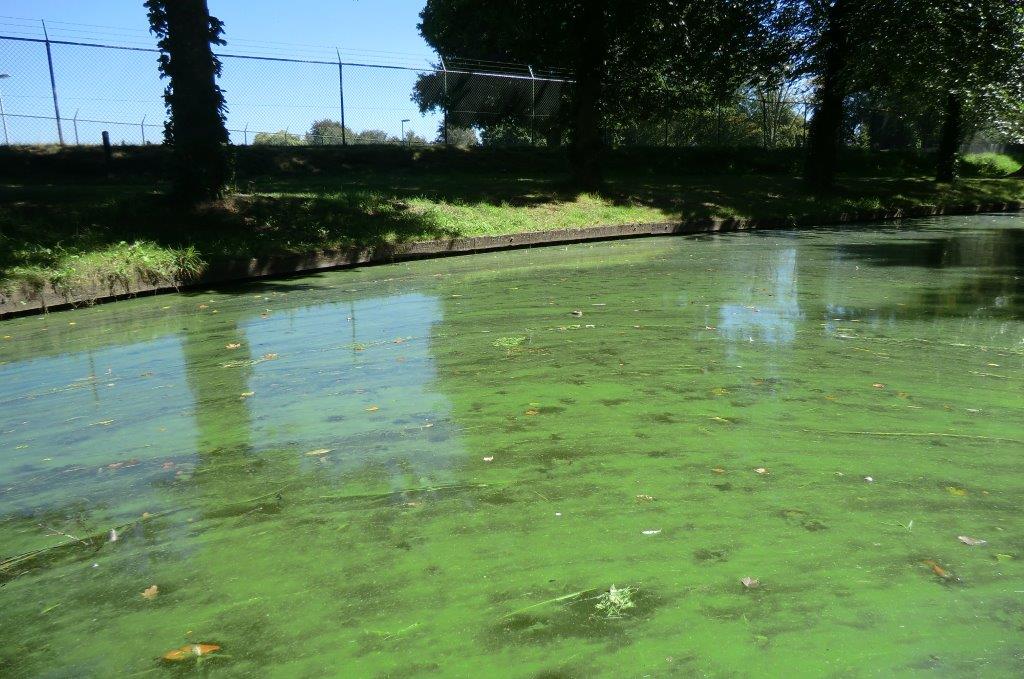
Water quality can change as a result of the physical or chemical changes that climate change is causing in the water itself. Cases in point are salinisation, which involves an increase in salt concentrations, and the concentrations of oxygen, nutrients and micropollutants in the water. These are referred to as the physio-chemical effects of climate change on water. For example, high water temperatures can lead to a reduction in oxygen concentrations in water.
Biological effects
Climate change also affects every living thing in the water, such as fish, aquatic plants, algae and mosquitoes. These are the biological effects of climate change on the quality of surface water.
Visualisation
The visualisation below shows several potential consequences of climate change for water quality. Clicking on the image will produce an enlarged version, in which you can click on the individual effects for a brief explanation. As the visualisation has been developed within the framework of the Climate-proof Cities focus area of the National Water and Climate Knowledge and Innovation Programme (NKWK-KBS), it is focused on urban areas. More consequences of climate change for water quality are outlined in the image on pages 14 and 15 of the STOWA publication “Een frisse blik op warmer water” [A fresh look at warmer water].