
Ga naar de inhoud
Climate Adaptation Platform Netherlands (naar homepage)
Direct naar
  • About us
  • Sitemap
  • Nederlands
  • Caribbean
  • Helpdesk
  • Home
  • Get started
  • Knowledge dossiers
  • Tools
  • Examples
  • Library
  • Policy and programmes
  • About us
  • Sitemap
  • Nederlands
  • Caribbean
  • Helpdesk
  1. Home ›
  2. Knowledge dossiers ›
  3. Urban water quality ›
  4. What makes a water system vulnerable to climate change? ›
  5. Water temperature

Water temperature

Higher water temperatures accelerate biological processes. In such circumstances, algae and duckweed grow faster, whilst issues arising from fish mortality, blue-green algae and mosquitoes may occur more frequently. Furthermore, the temperature can cause reproductive issues. The paragraphs below explain more about the various control variables that affect the temperature of a water system. The table below shows how climate change can affect these control variables.
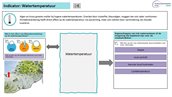
Afbeelding indicator Watertemperatuur
Screenshot from the knowledge document. Downloading the knowledge document (pdf, 13 MB) gives you access to the interactive pages.

Climate change has a direct effect on water temperatures during periods of heat, when the water will heat up. In addition, climate change and water temperatures are interrelated in an indirect manner: during drought, seepage pressure will decrease, resulting in less cold water coming up from the soil.

Impact of control variables on water temperature

The most important control variables that may impact water temperatures are:

Depth

The water temperature is directly related to the depth of the water system. In deeper waters, the maximum temperature is lower than in shallow waters. On the other hand, deeper water that has heated up will cool down less rapidly and can stay relatively warm for a longer period of time. A water system with a depth of less than 0.5m is highly vulnerable to warming. Water systems with a depth of 0.5m to 1m are moderately vulnerable, whilst systems deeper than 1m are not vulnerable to warming.

Incidence of sunlight

Water temperatures are also directly related to the volume of sunlight falling on the water. Trees and buildings create shade, as a result of which the water will warm up to a lesser extent. However, heat tends to linger between buildings, resulting in higher air temperatures. A watercourse that is more than 25 per cent shaded will not be vulnerable to warming. Watercourses that are 10 to 25 per cent shaded are moderately vulnerable to warming.

Supply of cold seepage water

A water system containing a high proportion of seepage water is relatively cool, because water from the soil is lower in temperature than surface water. The more seepage water enters the water system, the less the water will warm up. A system with a seepage water supply in excess of 0.5mm per day is not vulnerable to warming.

Air temperature

Buildings, houses, roads and pavement retain a great deal of heat. On summer days, the difference between cities and their surrounding areas can be up to 7 or 8 degrees Celsius. In higher air temperatures, surface water will heat up more rapidly during daytime, whilst in the night, it will be more difficult for the water to release heat to the air. A water system largely surrounded by pavement and concrete will be highly vulnerable to warming. Water systems situated in a mix of pavement/concrete and greenery are moderately vulnerable to warming. Water systems situated in a green, open environment are not vulnerable to warming.

How vulnerable a water system is to these different control variables depends, among other things, on what it is used for. Is it used for swimming, as cooling water, for drinking water, or for irrigation? Each function has its own threshold values, which also differ from one water system to another. The Urban Water Quality, Climate and Adaptation (SWKA) tool provides an approximate set of threshold values for the different control variables mentioned above, for various functions. These threshold values are not tailored to any specific water system and can therefore only be used as an indication.

Effect of climate change on the control variables

The table below shows how climate change impacts the various control variables that together determine the nutrient content of a water system. For example, the table reflects that increasing waterlogging causes more sewer overflows, which may have a negative effect. At the same time, sewer overflows are decreasing as a result of the increasing drought, which is a positive effect. More information can be found in the Excel file on Functional Uses of Water Types  (xlsx, 499 kB). The table below has been derived from a table in this file, which is contained in sheet “Effects of climate change”, part C.

Effect of climate change on control variables
Control variable Heat Waterlogging Drought Watersafety
Depth Increase, negative Decrease, negative
Incidence sunlight
Supply of cold seepage wate Increase, positive Decrease, negative Increase, positive
Air temperature Increase, negative

Are you interested in the quantitative effects per water system? These can be determined using the calculation tool, the Guide to Water Quality Stress Tests. Climate change and water quality, developed by the Foundation for Applied Water Research (STOWA). Or use this guide to draw up a detailed water and substances balance based on climate prognoses.
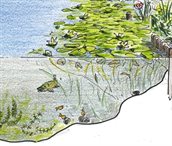
natuurfunctie
  • Urban water quality
    • How is climate change affecting water quality and aquatic life?
    • How does climate change impact functional water quality?
    • How vulnerable is a water system to climate change?
    • What makes a water system vulnerable to climate change?
      • Nutrient content
      • Through-flow
      • Water temperature
      • Oxygen content
      • Salt content
      • Pollution
    • How do adaptation measures affect water quality?
    • How can negative effects on water quality be countered?
    • How can you design an area with an eye for water quality and climate change?

Share this
  • Delen op Facebook
  • Delen op LinkedIn

Helpdesk

mail-ballon-transparant

Please use the contact form to contact the editors if you have any questions or comments regarding climate adaptation or this website.

Joining forces to accelerate climate proofing!

The Climate Adaptation Knowledge Portal is the pre-eminent source of information for everyone engaged in climate adaptation. It provides practical information, useful tools, inspiring examples and the latest news.

About this website

  • About us
  • Disclaimer
  • Privacy statement
  • Contact
  • Accessibility
  • Archive

Follow us

LinkedIn