Programme
The main conference programme takes place on Tuesday 6 and Wednesday 7 April 2027, with informal welcome drinks on Monday evening for those arriving early.
You can find the full conference programme below, or click on the following links to skip to a specific day.
- Monday, 5 April 2027 - Welcome in Apeldoorn
- Tuesday, 6 April 2027 - Conference Programme
- Wednesday, 7 April 2027 - Excursion Programme
Monday, 5 April 2027
5.00-7.00pm | Welcome drinks | location to be decided
Arriving in Apeldoorn on Monday? Join us for informal welcome drinks ahead of the conference. It is an opportunity to meet fellow participants and speakers and make some first connections before the programme gets underway the next morning.
Tuesday, 6 April 2027
Location: De Zwitsalhal, Apeldoorn
Programme: 9.00am-9.00pm
Tuesday is all about meeting, exchanging knowledge and exploring how collaboration can turn climate adaptation ambitions into action.
9.00-10.30am | Welcome, registration and presentation area
Start the day at your own pace. Register, enjoy a warm welcome and take some time to explore the presentation area, where participating organisations and projects can share their work, research and experiences. The presentation area will also be open at several points throughout the day, giving you plenty of opportunity to showcase your own project or research, discover new initiatives and start conversations with other participants.
10.30am-12.00pm | Plenary session
We officially open the International Conference on LIFE IP Climate Adaptation with a lively plenary session moderated by Nathan de Groot. Following a welcome from the Mayor of Apeldoorn Ton Heerts, we turn to one of the central questions of the conference: what does it take to make climate adaptation work? A panel discussion will explore how climate adaptation is organised and put into practice in the Netherlands, with a particular focus on cooperation between different levels of government and other partners. We will look at the lessons this approach can offer, while also inviting perspectives and experiences from the audience. Katrien Termeer will contribute a keynote on collaboration and the process of creating change. There will be room for interaction throughout the session: this is not just a morning for listening, but also for meeting the people around you and exchanging experiences.

12.00am-1.15pm | Networking lunch
Continue the conversation over lunch. Meet other participants, reconnect with colleagues or visit the presentation area to find out more about the projects and programmes represented at the conference.
13.30-14.45pm | Interactive workshops - Round 1
The afternoon puts participants at the centre of the programme. In the first round, choose one of five interactive workshops and explore a climate adaptation challenge together with practitioners and experts.
1A | Hot and Healthy Cities
When it gets really warm, how do you make sure that you reach people who are most vulnerable to a heatwave? Via national and local heat action plans, the Dutch government sets measures for periods of extreme heat. Rotterdam takes it up a notch by allowing Rotterdam areas to develop plans of their own. A local coordinator brings all relevant people and parties together to identify what works locally: from public drinking fountains to urban forestry. In this workshop, we explore why effective heat action starts with local knowledge, strong networks and an approach tailored to each neighbourhood.
For whom? Professionals working on climate adaptation, public health, urban planning and the design of healthy, heat-resilient cities.
Organised by: To be confirmed.
1B | Nature-based Solutions: Bring the Green
Nature-based Solutions (NbS) can strengthen climate resilience while bringing in economic, environmental and social benefits. To increase scale, governments, financial institutions, specialists and other stakeholders need to find common ground and agree on how value can be created.
In this interactive workshop, we explore what it takes to unlock private finance for NbS. Best practices show how an ecosystem-based approach can make benefits visible, create a shared language between partners and reveal opportunities for public-private collaboration and investment. Together, we will examine how landscape-level cooperation can help create the conditions for financing nature at scale.
For whom? Professionals working on climate adaptation, nature-based solutions, finance and public-private collaboration.
Organised by: To be confirmed.
1C | Risks Are Real
Extreme weather affects everyday life. Disaster risk reduction provides valuable insights into the impacts of weather extremes, climate scenarios help us understand how those risks may change in the future.
The Dutch Local Climate Information project translates national climate information into what climate change could mean for individual cities and villages. Connecting these future scenarios with real-life examples can make risks more tangible and strengthen the case for action. In this workshop, we explore how professionals working on climate scenarios and disaster risk reduction can learn from one another, using examples from both the Netherlands and another European country.
For whom? Professionals working on climate information, climate risk, disaster risk reduction and emergency management.
Organised by: To be confirmed.
1D | Peatland Solutions: Peanuts or Problems?
To make climate adaptation in rural areas work, cooperation is needed and also viable business models. In peat meadow areas, farmers and other landowners face changing groundwater levels and competing demands for agriculture, nature, housing, water, biodiversity and recreation. At the same time, new opportunities are emerging.
This workshop explores how farmers, entrepreneurs and public authorities can work together on a climate-resilient and economically viable future for peatlands. For example, we dive into whether businesses should be rewarded for water retention, boosting biodiversity, carbon storage or landscape management. We discuss new business concepts, public-private cooperation and the choices involved in creating a future-proof rural landscape.
For whom? Professionals working both in urban and rural areas who see the need for collaboration across organisational and land-use boundaries.
Organised by: VIC and SWF (full organiser details to be confirmed).
1E | Stronger Together: Building Adaptation Networks
What does it take to turn collaboration into tangible results? In Zwolle, Regiolab Wijk van Morgen brings together local government, businesses, education, research and residents to develop practical solutions for a climate-resilient neighbourhood. One example is the Water-Circular Neighbourhood, where partners are working together to put new approaches into practice.
In this interactive workshop, Renate Postma, coordinator of Regiolab Wijk van Morgen at the Municipality of Zwolle, and Nanco Dolman, leading expert at Deltares, share how this partnership works in practice. How was the network built? What keeps partners connected, and what helps them move from shared ambitions to concrete action? Explore the collaborative approach behind the Regiolab and take away lessons for building strong adaptation networks in your own city or region.
For whom? Municipalities, provinces, water authorities, entrepreneurs, education professionals, climate and water researchers, and consultants.
Organised by: Municipality of Zwolle and Deltares.
14.45-15.15pm | Break
Time to recharge, continue a conversation from your workshop or have another look around the presentation area.
15.15-16.30pm | Interactive workshops - Round 2
A second workshop round gives you another opportunity to dive into a topic, compare approaches and learn from other participants.
2A | The Adaptation Pyramid: A Sum of All Angles
The Dutch Delta Programme for Spatial Adaptation brings different levels of governments together to accelerate climate adaptation. One of the tools used in this approach is the Adaptation Pyramid, which helps move from identifying challenges to setting concrete goals, taking action and monitoring progress.
The pyramid connects three layers of adaptation: emergency response, technical measures and strengthening natural systems. It goes without saying that collaboration is key. The Vallei en Veluwe Water Board and CAS Foundation, who developed the pyramid together, will elaborate on their cooperation and the results.
For whom? Climate adaptation professionals looking for a practical way to structure adaptation challenges, actions and collaborations.
Organised by: Delta Programme for Spatial Adaptation (DPRA), CAS Foundation and the Vallei en Veluwe Water Board.
2B | Engaging Communities: Keep It Cool
Apart from a technical challenge, climate adaptation is also a socio-spatial topic. Residents and communities are essential partners in making neighbourhoods more climate-resilient.
How do you involve people who do not automatically join the conversation? What happens when interests collide or residents develop initiatives of their own? When local people come up with an idea that could work, how do you make it work?
In this interactive workshop, municipalities share experiences, lessons and dilemmas that derive from working with residential communities.
For whom? Local governments and anyone working with residents and communities on climate adaptation.
Organised by: Municipalities of Apeldoorn, Arnhem and Groningen.
2C | Towards climate-resilient river landscapes
Rivers are the backbone of our landscapes, shaping where we live, work and produce our food. Yet many river systems are out of balance, facing both water shortages and flooding — challenges that will become more pressing as the climate changes. Restoring canalised rivers and streams has been an important first step. Now it is time to look at the wider river landscape and the role of floodplain restoration.
In this workshop, we explore how river landscapes can become more resilient, starting with the River Aa in North Brabant, a LIFE IP project area and living lab within SpongeScapes. We will connect experiences from North Brabant with lessons from other European river regions and explore the opportunities and challenges of cross-border cooperation between Brabant and Flanders. Together, we will discuss how international collaboration and shared learning can help accelerate the transition towards resilient, sponge-like river landscapes.
For whom? Professionals working in water management, spatial planning and regional cooperation.
Organised by: Water Authority Aa en Maas and the Province of North Brabant.
2D | Burning Hot: Policies on UV Radiation
UV radiation is often overlooked as a health issue due to climate change. This workshop looks at how political and practical interventions could bring down harmful exposure and reduce health risks.
Representatives of the Dutch regional public health services (GGDs) will speak about what they learned from providing practical guidance to local health policy makers. We will look at the policy areas involved and at measures in both the physical environment and the social domain. Concrete interventions and campaigns developed together with the Dutch Cancer Society (KWF) and Huidfonds (National Skin Fund) will bring in practical examples for discussion.
For whom? Professionals working in public health, climate adaptation and local policy who want to reduce the health impacts of UV radiation and extreme heat.
Organised by: Representatives of the Dutch regional public health services (GGDs), Huidfonds (National Skin Fund) and RIVM.
16.30-17.30pm | Networking drinks
After an afternoon full of ideas, it is time to reconnect. Join us for drinks, exchange workshop experiences and visit the presentation area. We will also briefly look ahead to the evening and to the excursion programme on Wednesday.
18.30-21.00pm | Joint networking dinner – location to be confirmed
We end the first conference day around the table in an inspiring location. The joint dinner offers plenty of time for informal conversation, new connections and continuing the discussions that started during the day.
Wednesday, 7 April 2027
Starting point: Apeldoorn Town Hall
Excursion programme: approximately 09.30am-16.00pm
On Wednesday, we move from discussion to practice. Choose one of four regional excursions in Apeldoorn and the surrounding area, Arnhem or Zwolle and see how climate adaptation is taking shape on the ground. The excursions will introduce you to local challenges and practical approaches, while showing how different organisations and communities work together to create climate-resilient places. The programme will combine site visits, exchange and opportunities to learn directly from the people involved. Transport from the central starting point in Apeldoorn to the excursion locations will be arranged, and lunch will be included.
A | Arnhem - Both Beautiful and Climate-Ready
How can a city become more climate-resilient and more attractive at the same time? Arnhem is located between the flat Betuwe region and the more elevated Veluwe ridge, with the Lower Rhine and IJssel rivers flowing through. Due to these specifics, heat, drought and heavy rainfall affect parts of the municipality in different ways.
During this excursion, you can see how the city of Arnhem uses spatial planning, takes green measures and collaborates with residents and stakeholders to respond to climate challenges while improving biodiversity and quality of life.
For whom? Anyone interested in an integrated approach to balance climate-resilience in cities and living environments with other interests (including building homes and commercial spaces).
Organised by: City of Arnhem in collaboration with the local Climate-Proof platform.
B | Zwolle - Tomorrow’s Neighbourhood Today
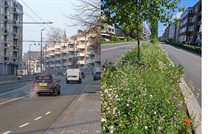
What happens when the government, businesses, schools, researchers and residents work together in one neighbourhood? At Regiolab Wijk van Morgen in Zwolle, such a collab is already there and delivering tangible results.
You’ll visit De Makersfabriek (an innovative industrial park) and the Living Lab in Dieze. There’s a garden filled with water-circular solutions, a display of local water challenges and an introduction of the TKI Water-Circular City project.
For whom? Municipalities, provinces, water boards, entrepreneurs, education professionals, climate and water researchers and consultants.
Organised by: City of Zwolle in partnership with Deltares, the Great Escape and De Makersfabriek.
Practical information: maximum of 24 participants; lunch included; transport by coach from Apeldoorn.
C | Apeldoorn - The Water Shapes the Land
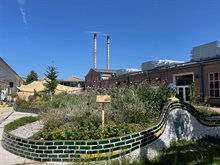
Discover how water has shaped Apeldoorn for centuries and continues to inspire climate adaptation measures today. This is a combined cycling and walking excursion by historic springs and streams from the Veluwe landscape towards the city centre.
Along the way, you visit projects where water, biodiversity, recreation and community engagement come together: green schoolyards, community gardens, plus the City Park programme. Meet the people behind these projects and see how the local government, residents, schools and community organisations turn climate ambitions into action. The excursion offers practical inspiration on Nature-based Solutions, citizen participation and integrated urban planning.
For whom? Policymakers, project managers, researchers and practitioners interested in urban climate adaptation, community engagement, Nature-based Solutions and integrated urban planning.
Organised by: City of Apeldoorn / LIFE-IP Climate Adaptation.
D | Apeldoorn region - How Meadows Make Us Stronger
You will go into the country to see how climate adaptation is taking shape in the rural landscape around Apeldoorn. After travelling by bus to the GEUS area, you continue by bike through a landscape where water, agriculture, nature, recreation and local communities are closely connected.
You’ll meet farmers, residents, land managers, entrepreneurs and public authorities working together on drought, water availability and landscape resilience. See how streams, springs and natural water systems can help retain water and support biodiversity, agriculture and the wider landscape. Emphasis will be on collaborating: balancing different needs, making difficult choices and building an integrated response to a changing climate.
For whom? The excursion has broad relevance for professionals working on rural climate adaptation, water, agriculture, nature and area-based collaboration.
Organised by: City of Apeldoorn – GEUS team.
At the end of the excursions, the groups return to Apeldoorn for a short closing moment. After two days of conversation, exploration and exchange, we hope you will leave with new ideas, useful connections and fresh inspiration for making adaptation work in your own city, region, organisation or programme.
More information
Questions about the conference? Send an e-mail to evenementen@helder-en-duidelijk.nl